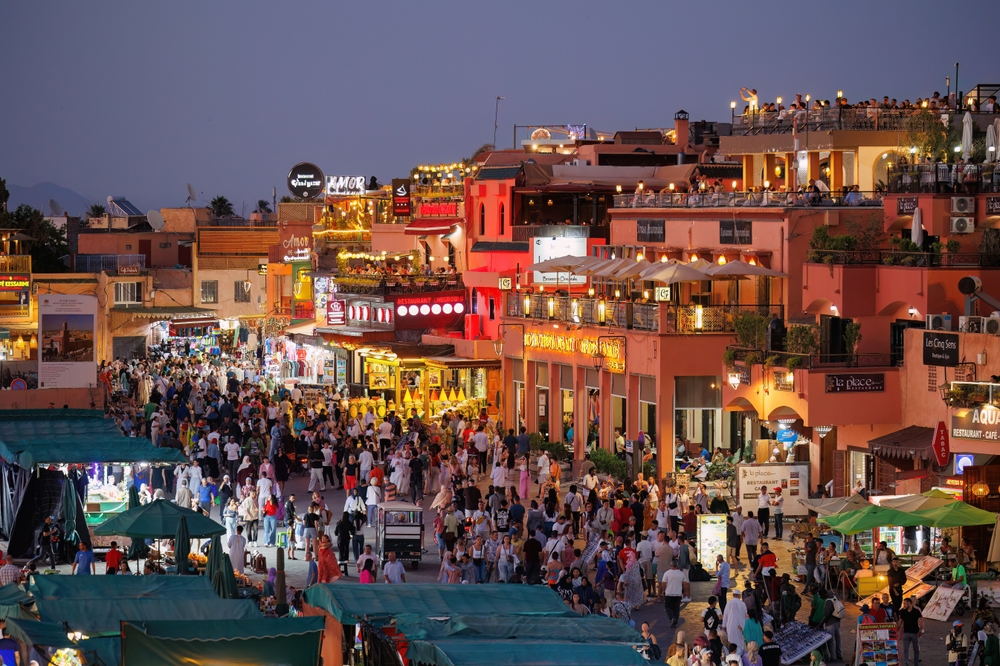
Argan oil is one of Morocco’s best-known products, but there is much more to the small bottle than a cosmetic ingredient. Its production is closely linked to the argan forests of south-western Morocco, the traditional knowledge of Amazigh communities and the work of local women. How is argan oil made, what is the difference between culinary and cosmetic oil, and how can we recognise a truly high-quality product when shopping?
Today, argan oil is found in cosmetics around the world. It is used in facial serums, hair treatments and luxury beauty products. In Morocco, however, it has a much longer history. For generations, it has been part of the local cuisine, body care and livelihoods of Amazigh (Berber) communities. Its story is closely linked to south-western Morocco, where the argan tree grows – a tree whose fruit provides the raw material for making the oil. What we now know as an internationally sought-after product was originally part of local people’s everyday lives. And it is the production method, the origin of the raw material and the differences between the various types of oil that determine what we are actually buying in Morocco.
The argan tree (Argania spinosa) grows naturally mainly in south-western Morocco. Its most significant woodlands lie in the areas between Essaouira, Agadir and the inland parts of the Souss-Massa region. It can survive in dry conditions where many other trees would struggle. Its root system helps it make use of limited water supplies and stabilise the soil. Argan forests are important for more than just oil production. They provide grazing for livestock, protect the soil from erosion and help sustain local communities.
In 1998, UNESCO designated the Arganeraie area as a biosphere reserve. It covers approximately 2.5 million hectares, although this does not mean that the entire area is covered with argan trees. The reserve encompasses a wider territory with various ecosystems, settlements and economic activities. The argan tree is therefore much more than a source of a cosmetic ingredient. It is one of the foundations of the local economy and an important part of Morocco’s natural heritage.
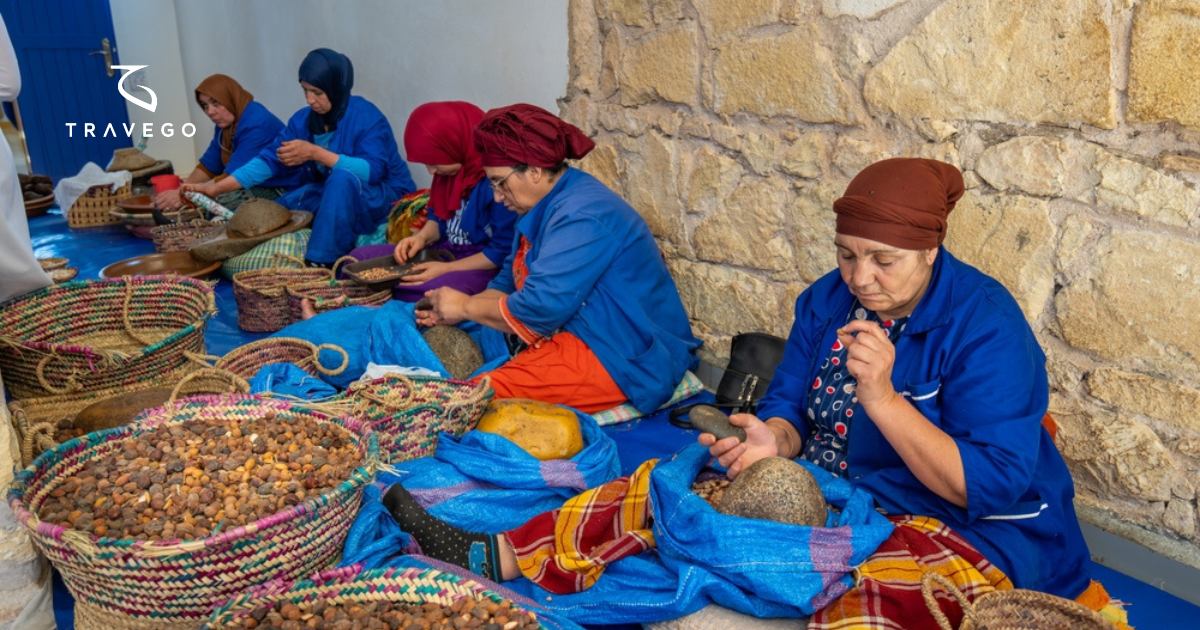
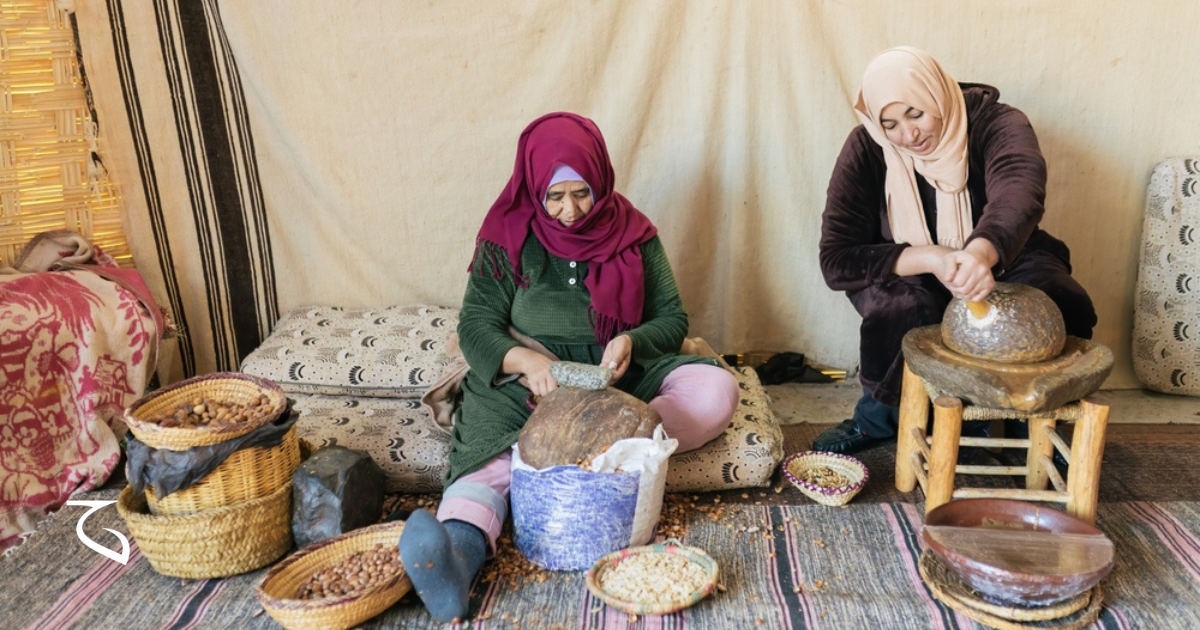
The exact beginnings of argan oil production cannot be reliably dated from historical records. We do know, however, that its processing is part of the traditional knowledge of Amazigh communities in south-western Morocco. For generations, production was primarily women’s work. Mothers taught their daughters to gather the fruit, crack the hard shells, extract the kernels and process them into oil. Argan oil served several purposes in the home. It was used in cooking, in traditional skin and hair care, and on social and family occasions. According to UNESCO, the oil was even traditionally given as a wedding gift and used to prepare festive dishes. In 2014, the traditional practices and knowledge associated with the argan tree were inscribed on UNESCO’s Representative List of the Intangible Cultural Heritage of Humanity. It is important to distinguish what UNESCO recognised. It was not the oil itself as a commercial product, but above all the knowledge, working methods and cultural traditions associated with its extraction and use.
When visiting a traditional production facility or a women’s cooperative, we can watch a process that explains why argan oil is among the more expensive vegetable oils. Production consists of several stages.
1. Harvesting and drying the fruit
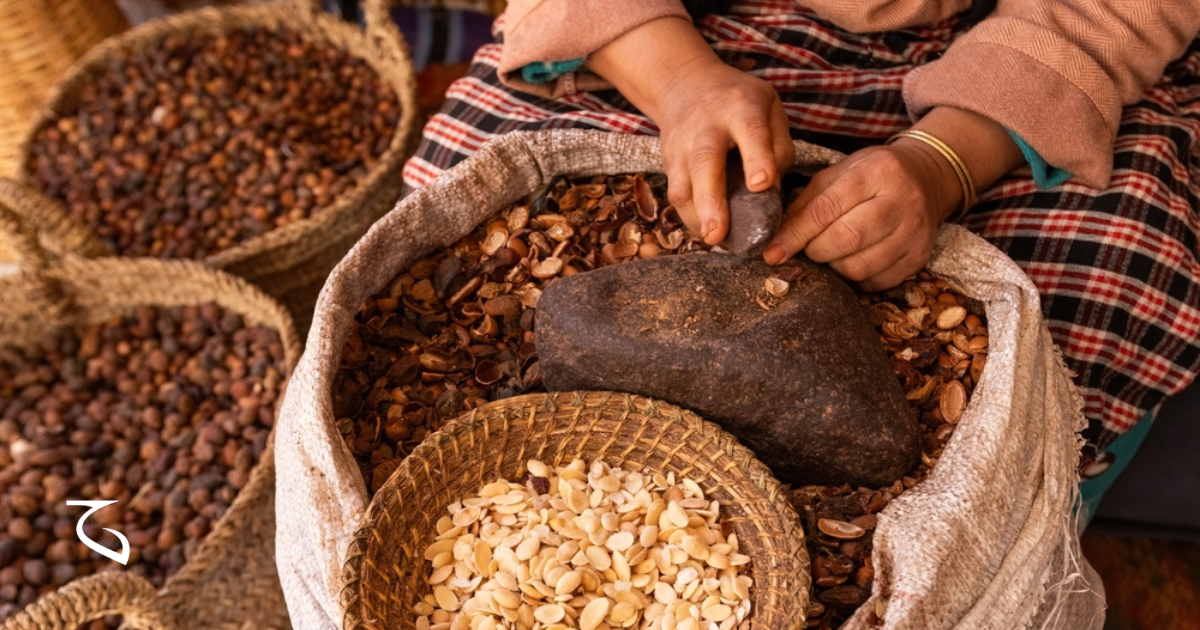
The argan tree produces fruit resembling small olives. Once ripe, the fruit is collected and dried. Inside the flesh is an exceptionally hard stone, usually containing one to three oil-rich kernels. These kernels are the raw material used to make the oil.
2. Removing the flesh and cracking the stones
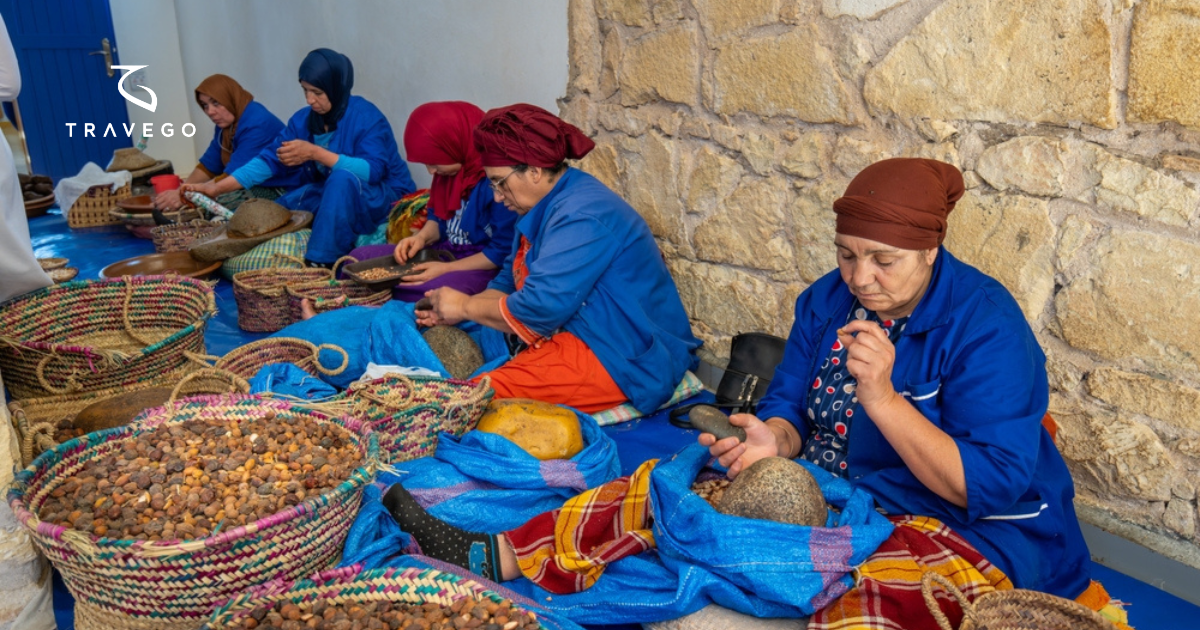
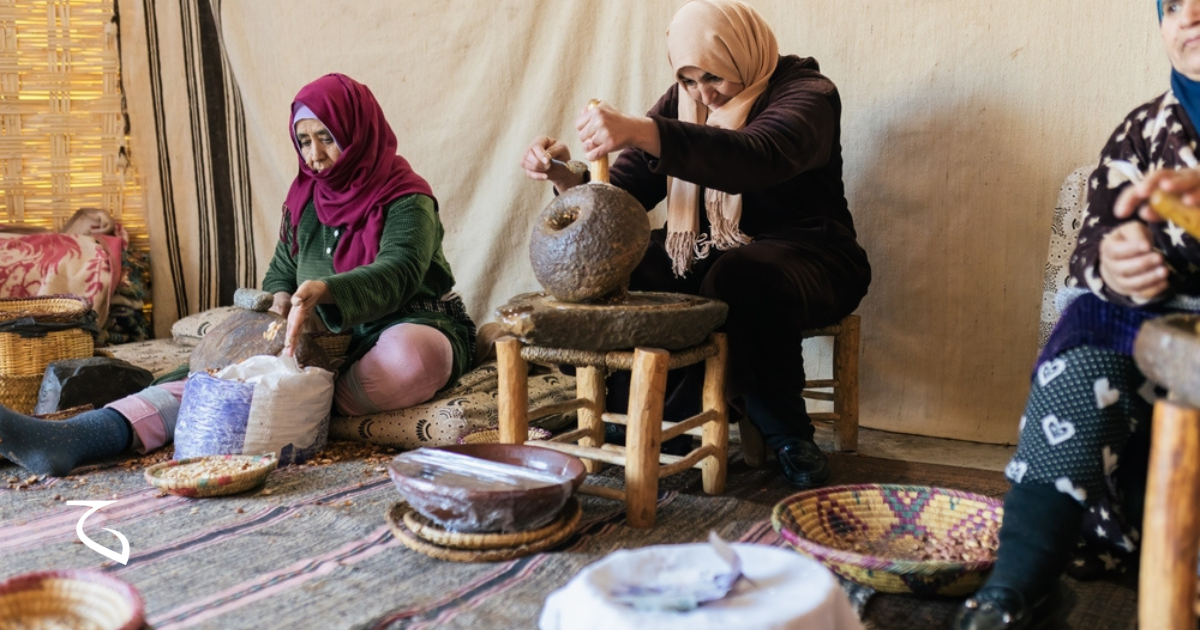
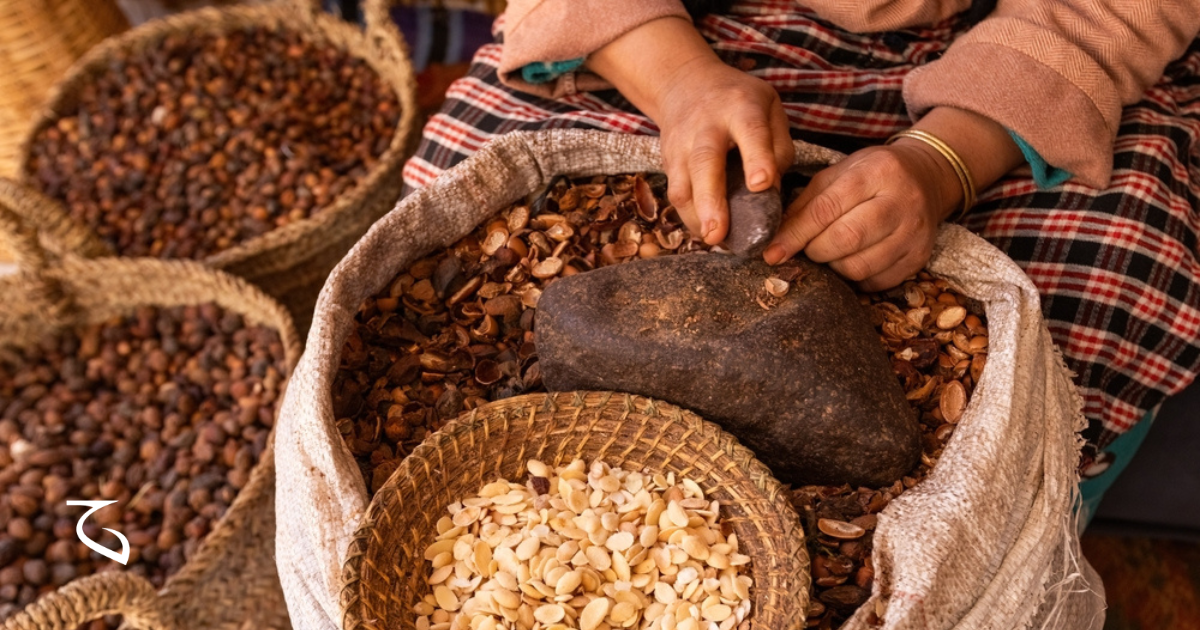
After drying, the outer flesh is removed. One of the most demanding parts of traditional production follows. Women crack the hard stones using rocks and remove the small kernels by hand. This process requires experience and precision. The kernels must not be damaged, and processing them by hand is very time-consuming.
3. Roasting or processing unroasted kernels
This is where the fundamental difference between the two types of argan oil arises. Kernels intended for culinary oil are usually lightly roasted. Roasting creates the characteristic nutty flavour and aroma. Cosmetic oil is made using unroasted kernels.
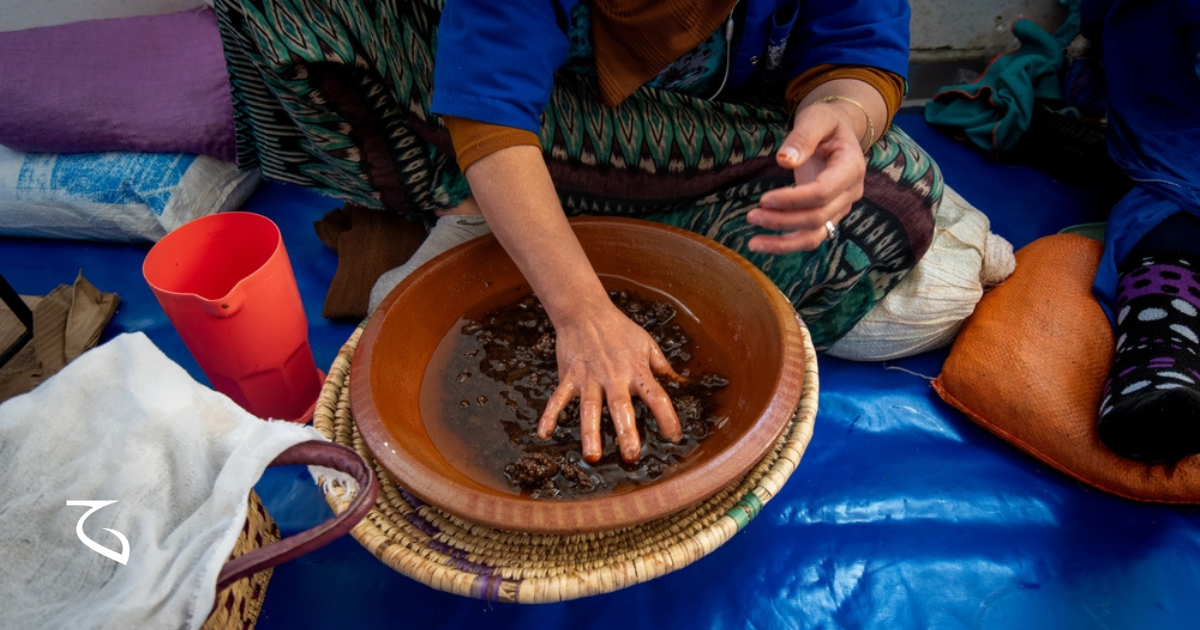
4. Grinding and extracting the oil
In the traditional method, the kernels were ground in a stone mill. The resulting paste was then worked by hand with added water to separate the oil. Today, many cooperatives use mechanical presses, which allow more hygienic and efficient processing. This does not automatically mean that mechanically pressed oil is of lower quality than handmade oil. On the contrary, modern processing can improve control over the hygiene, purity and stability of the finished product.
This is where it becomes clear why genuine argan oil is relatively expensive. According to scientific sources on argan processing, producing approximately four litres of oil can require around 100 kilograms of dried fruit and about 20 hours of work. This works out at roughly 25 kilograms of dried fruit per litre of oil. The actual amount can vary depending on the quality of the harvest, the oil content of the kernels and the processing method. The high price is therefore not simply a result of the product’s popularity in the cosmetics industry. Its limited geographical origin, the quantity of raw material required and the labour-intensive processing all play a significant role.
Numerous women’s cooperatives, known as coopératives féminines, have been established around Essaouira, Agadir and other places in south-western Morocco. Their significance goes beyond oil production itself. Traditionally, women carried out much of the work involved in processing argan at home. The development of cooperatives enabled them to organise production, sell products to a wider market and earn their own income. UNESCO describes women’s cooperatives as an important part of safeguarding traditional knowledge and supporting the economic position of local women. However, not all cooperatives operate in the same way. Some focus on producing and processing oil, while others combine production with cosmetics sales and tourist visits. There are also shops that present themselves as cooperatives, even though the way they actually operate may not be clear to visitors. A sign saying “women’s cooperative” is therefore not in itself a guarantee of the oil’s origin or quality. During a visit, it is worth asking where the fruit comes from, where the oil is pressed and whether the producer can document the origin of its products.
This is one of the most important things to know when buying argan oil in Morocco.
Culinary argan oil is usually made from lightly roasted kernels. It has a characteristic nutty aroma and flavour. In Moroccan cuisine, it is mainly used to flavour dishes, salads, couscous or bread. It is also a key ingredient in the traditional spread amlou, made from argan oil, almonds and honey. Good-quality culinary oil has a pleasant nutty aroma without a musty or rancid smell.
Cosmetic argan oil is made from unroasted kernels. Its scent is usually milder, without the pronounced roasted aroma of culinary oil. It is used to care for the skin, nails and hair. It mainly contains unsaturated fatty acids, particularly oleic and linoleic acids, as well as tocopherols, which include vitamin E. These substances contribute to its properties as a cosmetic oil. Argan oil may help soften the skin and reduce moisture loss. However, it should not automatically be credited with the ability to treat skin conditions, remove wrinkles or repair damaged hair. Such claims would require separate clinical evidence.
When buying argan oil, we often come across advice claiming that genuine oil should be thick, dark or strongly scented. Such generalisations can be misleading. Colour, scent and thickness alone do not prove that an oil is genuine. So what should you look for?
If you are buying pure cosmetic argan oil, the ingredients list should state:
Argania Spinosa Kernel Oil For 100% pure oil, this should be the only ingredient. If the product contains fragrance, silicones or other vegetable oils, it may be a standard cosmetic product containing argan oil rather than pure argan oil. That does not necessarily mean the product is poor quality. It does, however, mean that we are buying something different.
A reputable producer should be able to provide the origin of the raw material, the processing location and identification of the specific production batch. Morocco also has a protected geographical indication, IGP Argane, recognised in 2009. This designation is linked to rules governing the product’s geographical origin, production and inspection. This does not mean that oil without IGP certification must be of poor quality. However, certification provides stronger evidence of verified origin than a seller’s claim that it is “genuine Berber oil”. The Moroccan authority ONSSA maintains records of the relevant regulations, including the 2025 amendment.
Culinary argan oil made from roasted kernels should have a pleasant nutty aroma. Cosmetic oil made from unroasted kernels usually has a milder, natural scent. Strong added fragrance is not a sign of higher quality. Equally, a complete absence of scent does not automatically mean the oil has been adulterated. It may have been processed in a way that changed its scent. A distinctly musty or rancid smell, however, may indicate oxidation and a decline in quality.
Argan oil contains unsaturated fatty acids, which are susceptible to oxidation. Prolonged exposure to light, air and high temperatures can reduce its quality. Choose tightly sealed packaging, ideally made of dark glass or another material that protects the contents from light. Information about the best-before date and batch is also important. Oil displayed in direct sunlight for weeks in an open or transparent container may not be the best choice.
Genuine argan oil comes at a price because of the labour-intensive production process. An exceptionally cheap product may raise questions, especially if the seller claims it is pure, handmade oil of the highest quality. On the other hand, a high price is no proof of authenticity either. Research confirms that argan oil can be adulterated by adding cheaper vegetable oils. Reliable verification of purity therefore requires laboratory analysis. Methods include analysing fatty acids, sterols and other chemical indicators. Naturally, we cannot carry out such testing when shopping in a tourist store. This makes it all the more important to choose a trustworthy producer whose product has a traceable origin.
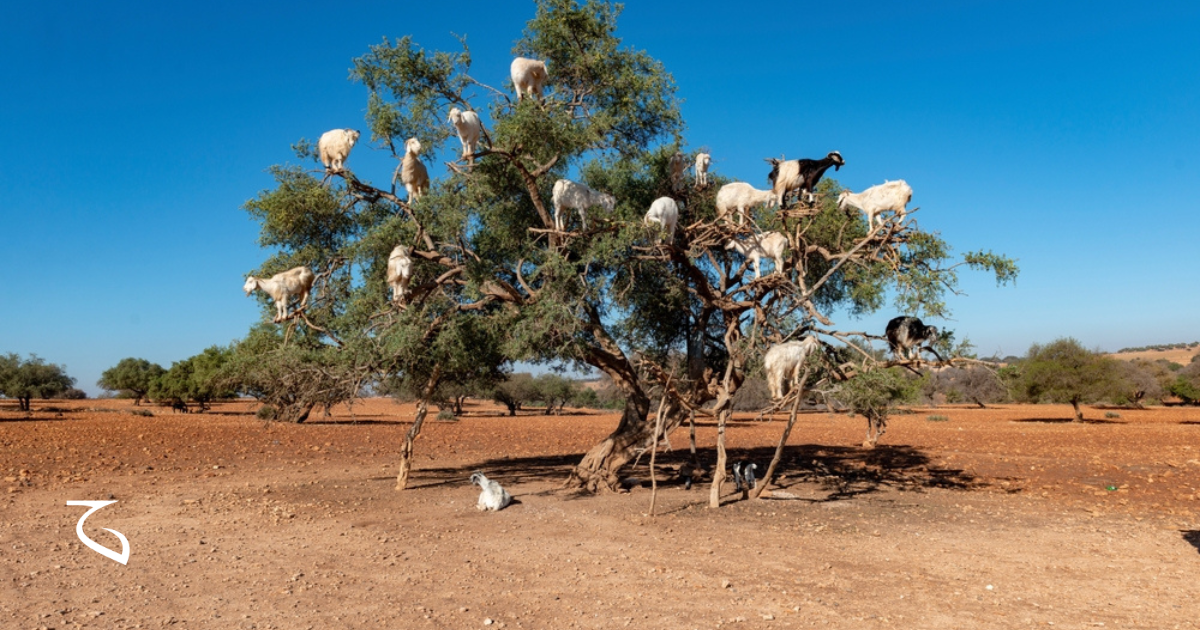
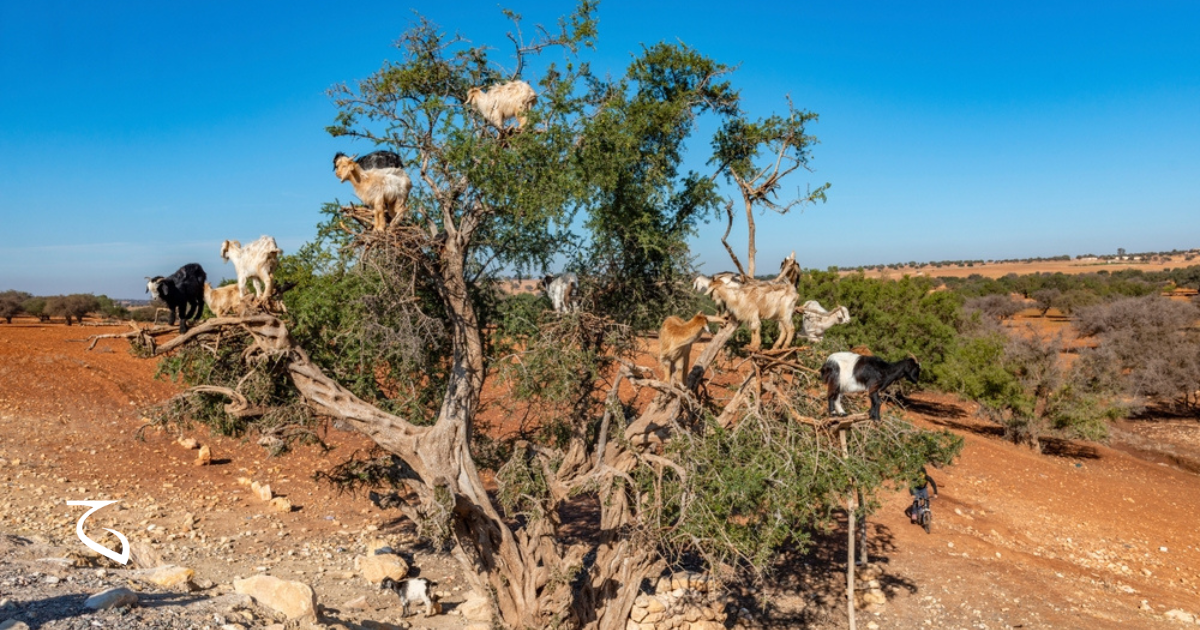
One of the best-known sights of south-western Morocco is goats standing on the branches of argan trees. This is a real phenomenon. Goats can climb trees to reach leaves and fruit, especially when little food is available on the ground. National Geographic has also covered this unusual behaviour in its travel article about Moroccan goats. Argan oil is also associated with an older method of obtaining stones from fruit that had passed through the digestive systems of animals. However, this does not mean that high-quality argan oil for today’s market is produced this way. Research comparing different production methods found unpleasant sensory characteristics in oil extracted from kernels from fruit digested by goats. Modern, controlled production therefore favours harvesting and processing suitable fruit without this practice. And one more important detail: although goats in trees are a natural phenomenon, not every tourist stop featuring goats in argan trees necessarily shows their spontaneous behaviour.
Growing demand for argan oil has brought local communities new economic opportunities. At the same time, however, it has increased pressure on the landscape where argan trees grow. Argan forests are threatened by a combination of drought, climate change, overgrazing and intensive use of natural resources. Some traditional land-management rules are therefore taking on renewed importance. One of these is the agdal system, in which local communities temporarily restrict access to certain areas to allow fruit to ripen and vegetation to regenerate. UNESCO describes this system as part of traditional Amazigh land management, linking the protection of natural resources with the needs of local people. This shows that the future of argan oil does not depend solely on modernising production. It also depends on preserving the landscape and the knowledge of the people who have used it for generations.
When travelling around Morocco, we can easily buy argan oil in a shop, at a market or in a tourist store. Visiting a genuine production cooperative, however, offers much more. We can see the difference between the fruit, the hard stone and the tiny kernels from which the oil is extracted. We come to understand why cracking the stones by hand is so demanding and why different production methods are used depending on whether the oil is intended for culinary or cosmetic use. At the same time, we can gain a better understanding of the position of local women and how traditional knowledge is carried into the modern economy. Of course, not every visit to a shop with a production demonstration offers the same experience. There is a difference between a place that mainly sells cosmetic products and a cooperative that genuinely processes argan. It is therefore worth knowing what kind of place we are visiting and what we can learn there.
Argan oil is one of the products we encounter quite often when travelling through Morocco. Its true value, however, lies in more than the contents of a small bottle. Behind its production are a distinctive natural ecosystem, the traditional knowledge of Amazigh communities, the work of local women and today’s questions of nature conservation and responsible resource management. Understanding these connections helps us better appreciate the country we are visiting. Discover Morocco with TRAVEGO TOUR. On our sightseeing tours, we explore not only its historic cities, architecture and contrasting landscapes, but also the traditions and everyday lives of local people.
TRAVEGO TOUR – We create journeys worth your time.
1 / 7