The dehesa is one of Andalusia’s characteristic landscapes, but its significance goes far beyond the image of pastures dotted with oak trees. Shaped over centuries, it is a system that connects the soil, holm and cork oaks, Iberian pig farming and the production of jamón ibérico. Why are acorns important, what does montanera mean, and why does the label ibérico not automatically mean bellota? We explore the connections behind one of the best-known products of Spanish gastronomy.
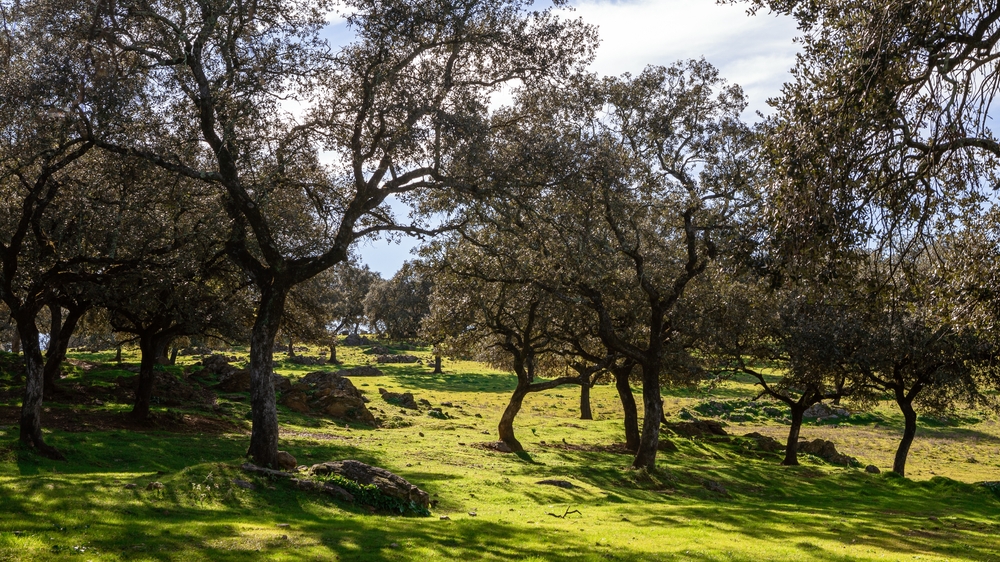
At first glance, the dehesa may look like open woodland. There is plenty of space between the trees, with grass growing beneath them and animals grazing. In reality, however, it is not a natural forest in the usual sense of the word.
The dehesa is a cultural landscape shaped over centuries, as well as a carefully managed agroforestry and pastoral system that combines livestock farming, grazing, the use of trees and soil conservation.
This is where the story of one of Spain’s best-known products begins – jamón ibérico de bellota.
Not in the curing house, nor even with the rearing of Iberian pigs themselves. It begins with the soil, climate and trees.
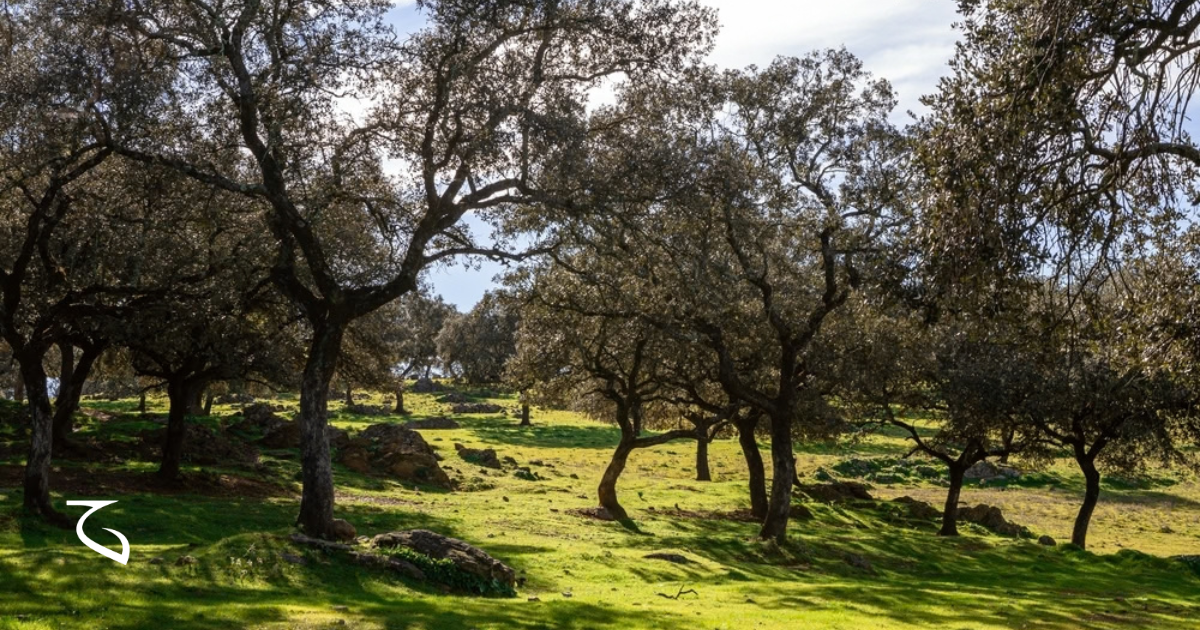
The dehesa is particularly characteristic of the south-western Iberian Peninsula. In Andalusia, extensive areas are found mainly in Sierra Morena – in the provinces of Huelva, Seville and Córdoba – as well as in other parts of western Andalusia.
The Andalusian government defines it as a human-shaped landscape created through the long-term use of open, tree-dotted pastures.
Its importance is clearly illustrated by the Dehesas de Sierra Morena Biosphere Reserve, which joined the UNESCO network in 2002. It covers approximately 424,400 hectares, with dehesa accounting for more than half of its area.
So it is not simply a “place where pigs are raised”. A single plot can simultaneously provide grazing, acorns, cork, wood and space for other traditional farming activities. The trees also protect the soil, while the system as a whole creates conditions for high biodiversity.
Andalusian dehesas provide habitat for species such as the Iberian lynx, Spanish imperial eagle and cinereous vulture.
When looking at a dehesa, pay attention to the trees. The two most characteristic species belong to the genus Quercus: the holm oak – encina (Quercus ilex subsp. ballota) and the cork oak – alcornoque (Quercus suber). Other oaks, such as quejigo, may also grow alongside them.
Their presence is no coincidence.
Much of the dehesa developed on soils that are shallow, nutrient-poor and often acidic. These are not ideal for intensive agriculture. This is precisely why, over the centuries, a system developed here that combines trees and extensive grazing rather than intensive soil cultivation.
The holm oak is exceptionally well adapted to the Mediterranean climate and is the most widespread characteristic tree of Andalusian dehesas. The cork oak needs slightly more moisture and has a particular preference for more acidic soils.
The balance between the two species therefore varies according to the soil, altitude, rainfall and local microclimate.
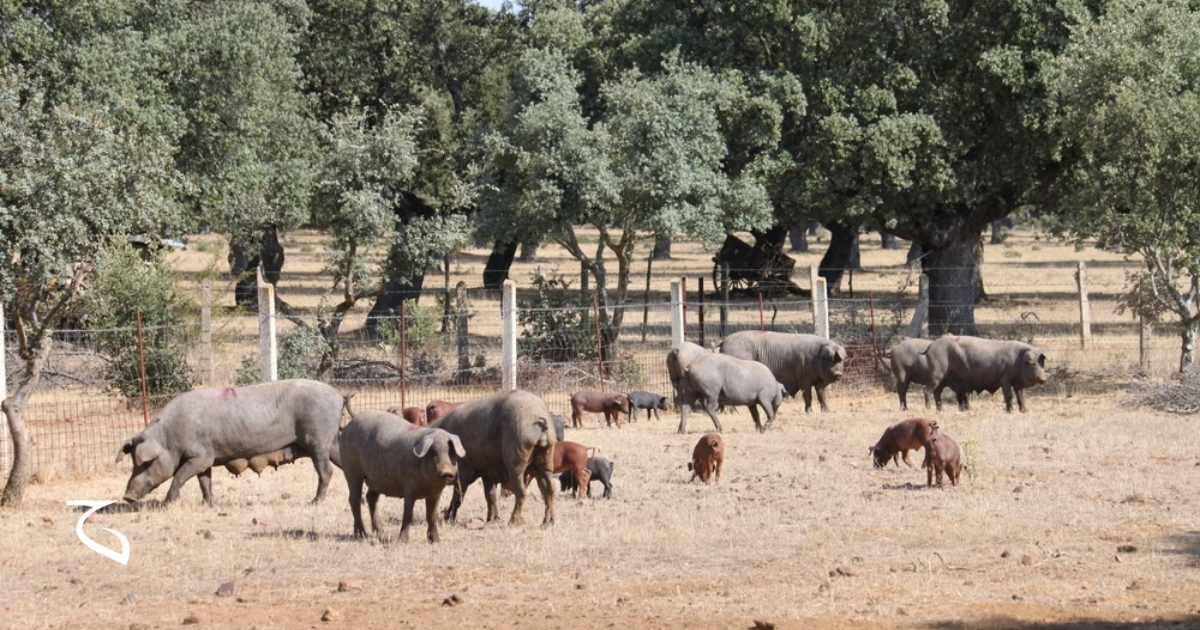
Holm and cork oaks share one crucial quality for Iberian pig farming: they produce acorns – bellotas in Spanish.
And this brings us to the connection between the landscape and jamón.
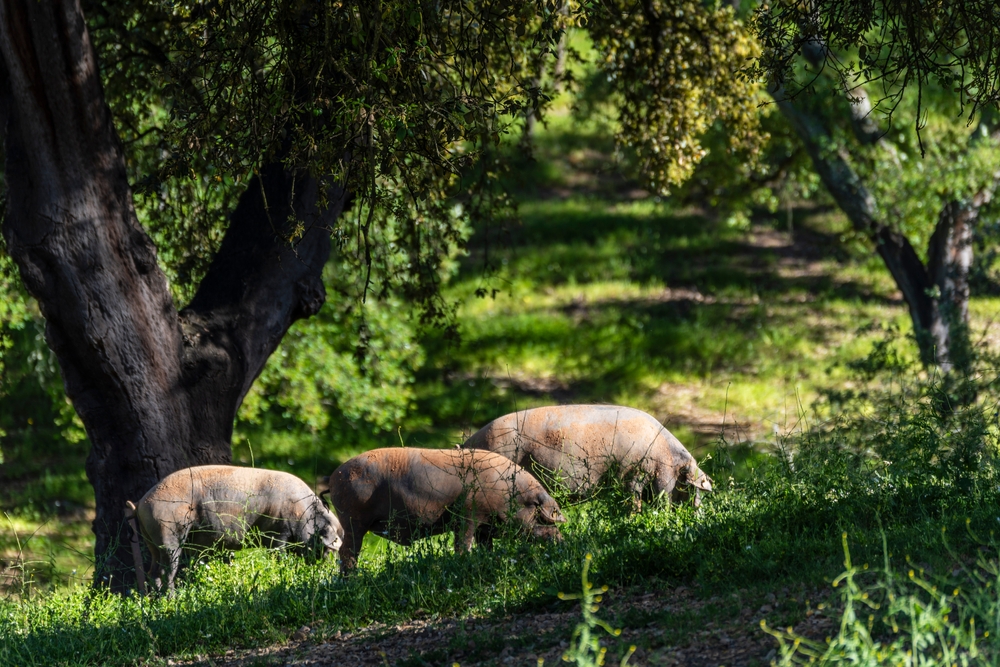
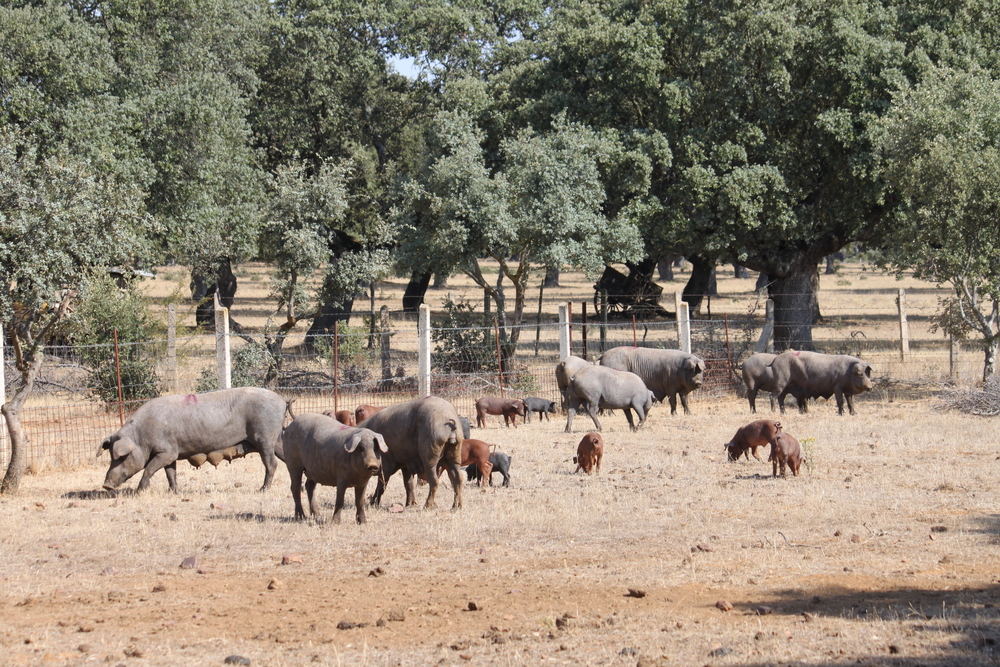
Autumn and winter bring the period known as montanera. The pigs roam the dehesa, feeding on its natural resources – mainly acorns and pasture.
This is not a folk tradition created for visitors. Montanera is a precisely defined part of the production system for the highest categories of jamón ibérico.
Spanish legislation stipulates that animals intended for products labelled “de bellota” must feed on acorns, grass and other natural resources of the dehesa during this phase, without supplementary feed.
They enter montanera between 1 October and 15 December and must spend more than 60 days in it, during which they must gain at least 46 kilograms.
This alone shows the value of the landscape itself.
Having an Iberian pig is not enough to produce jamón de bellota. You also need a sufficiently large and productive dehesa capable of sustaining the animals throughout montanera.
This is not left solely to the farmer’s discretion either.
Spanish legislation sets the maximum stocking density according to the extent of tree cover. Depending on tree canopy cover, the permitted density ranges from approximately 0.25 to 1.25 animals per hectare. In any given year, it may be reduced further depending on the actual acorn crop.
Andalusia therefore publishes an annual capa de montanera – a register of land suitable for fattening animals whose products are to carry the de bellota label.
In other words, for the highest categories of Iberian ham, checks cover not only the animal but also the landscape on which it grazed.
That is a detail we do not see when looking at a finished jamón in a shop.
Acorns are an important source of energy during montanera, and Iberian pigs can make very efficient use of them. They also eat grass and other natural resources of the dehesa.
However, the farming method itself is also important. The animals move across a large area in search of food.
The result therefore does not come from a single “miracle” feed, but from a combination of the Iberian pig’s genetics, diet, extensive rearing and the subsequent lengthy processing and curing.
The Junta de Andalucía also identifies four decisive factors in the quality of Iberian hams: the Iberian breed, the dehesa ecosystem, extensive farming and a slow, natural curing process.
That is why the simple equation “good jamón = an acorn-fed pig” is inaccurate.
The acorn matters. But it is only one part of the system.
This is probably the most practical information for anyone looking to buy quality jamón in Spain.
The word ibérico alone does not mean that the pig was raised in a dehesa and fattened on acorns.
The Spanish standard distinguishes between the animal’s genetic origin and the way it was raised and fed. This is why there are de bellota, cebo de campo and cebo products.
Even the familiar term pata negra has a precise meaning. Under Spanish legislation, it may only be used for the “de bellota 100% ibérico” category. Likewise, the terms dehesa and montanera are reserved for the de bellota category when labelling products.
For consumers, this is an important distinction.
The price of jamón does not reflect only the length of curing. Behind the highest categories are also the land, the number of trees, the acorn crop, the area needed for each animal, genetics and the time required for the entire process.
There are significant regional differences even within Andalusia.
A good example is Los Pedroches in the north of Córdoba province, one of the areas with a protected designation of origin for jamón ibérico.
Local conditions allow acorns from several oak species to be used. According to the DOP Los Pedroches specification, the average crop can reach approximately 1,000 kilograms of acorns per hectare.
Particularly interesting is the presence of the quejigo oak, whose acorns ripen earlier than those of some other species in the genus Quercus. This can extend the period during which natural food is available to the animals.
Local differences like these explain why, when discussing jamón, it matters not only how it is produced but also exactly where it comes from.
Andalusia has two protected designations of origin associated with Iberian ham – DOP Jabugo and DOP Los Pedroches.
The cork oak illustrates another feature of the dehesa: a single tree can serve more than one purpose.
It produces acorns that can be eaten during montanera, while also providing cork. Livestock farming, grazing, cork production and other economic activities can therefore coexist on the same land.
This is also why UNESCO describes the dehesa as a distinctive agroforestry and pastoral system of the Iberian Peninsula that allows several natural resources to be used at the same time.
This captures the essence of the dehesa far better than the image of oak trees scattered across the landscape alone.
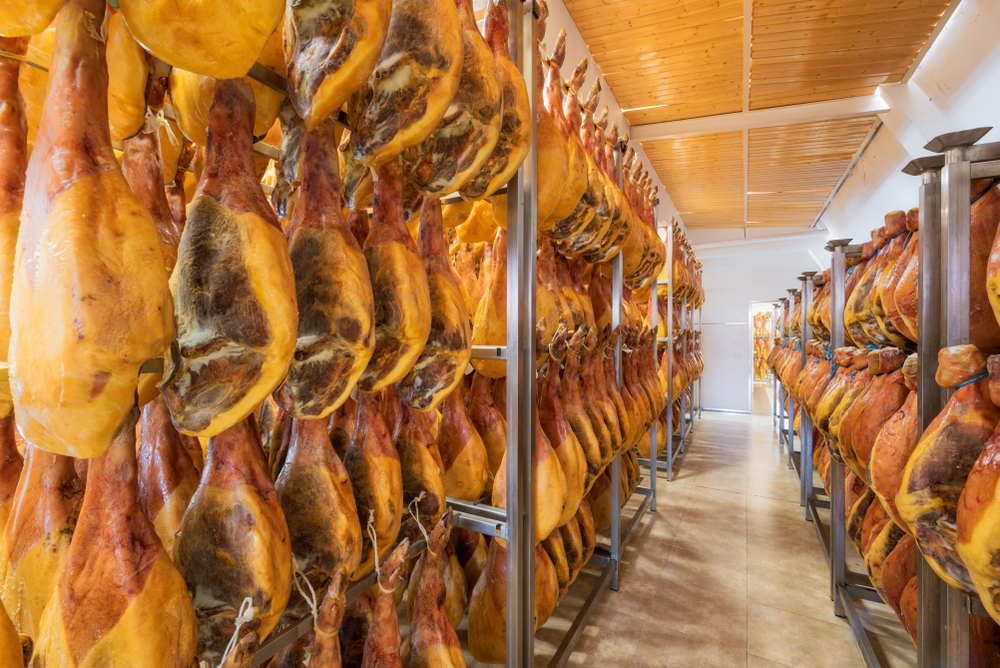
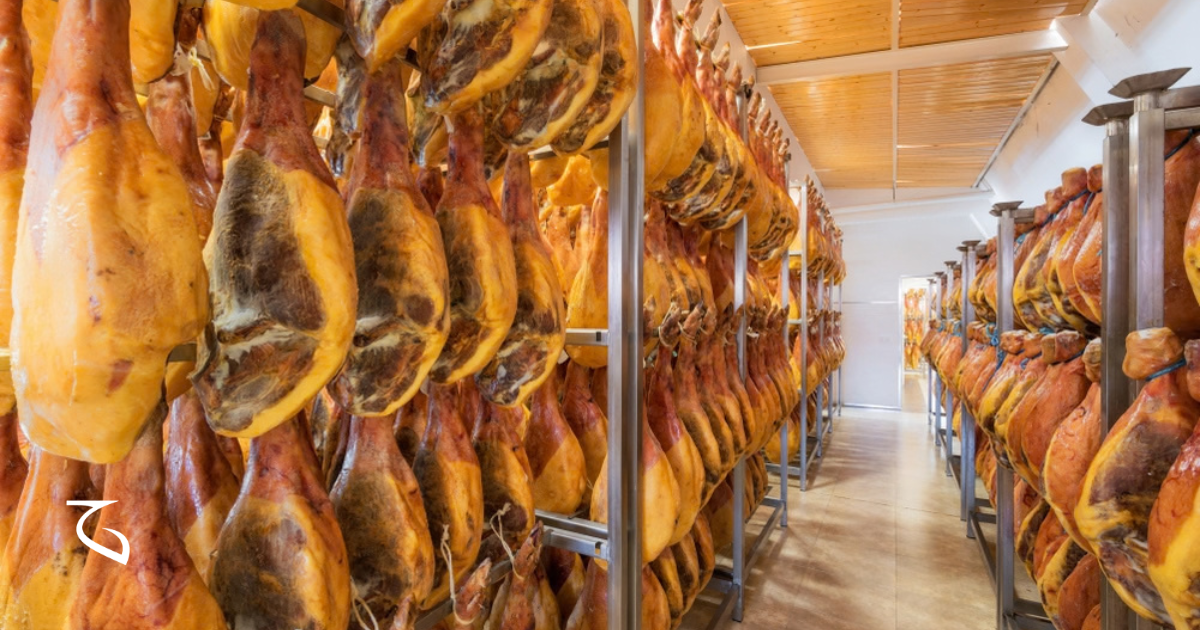
Jamón ibérico is often introduced only once it is hanging in a curing house or a cortador cuts a thin slice from it. Yet by then, we are seeing the final stage of a much longer process. To understand why Iberian hams differ in origin, labelling and price, we need to go back several steps – to the dehesa, the oaks, the acorn crop, the space available to the animals and montanera.
And that is precisely why it makes sense to include the dehesa in a sightseeing tour of Andalusia. Not as an extra food stop, and not merely as a place to taste jamón. It is an opportunity to understand the connection between the landscape, farming practices and a product that has become one of the symbols of Spanish gastronomy.
When we then see jamón de bellota ibérico on a label, we know that the word bellota does not refer only to what the animal ate. It points to an entire landscape-based system without which this product could not exist.
Places like these reveal Andalusia beyond its famous cities and monuments. The dehesa connects the landscape, centuries-old farming practices, Iberian pig rearing and one of the best-known products of Spanish gastronomy – jamón ibérico. That is why we have included it in the itinerary of our tour through Portugal and Andalusia. We do not just want to taste jamón. We want to see the environment in which it is produced, understand the importance of the oaks, acorns and montanera, and only then taste the result.
Porto – Sintra – Lisbon – Andalusian dehesa – Seville – Ronda – Málaga
𝗪𝗲 𝗰𝗿𝗲𝗮𝘁𝗲 𝗷𝗼𝘂𝗿𝗻𝗲𝘆𝘀 𝘁𝗵𝗮𝘁 𝗮𝗿𝗲 𝘄𝗼𝗿𝘁𝗵 𝘆𝗼𝘂𝗿 𝘁𝗶𝗺𝗲.
1 / 4