Alongside Georgia and Armenia, Azerbaijan is perhaps the least explored country in the South Caucasus, but if you visit, you certainly have plenty to look forward to! You will find tales of the East, palaces and mosques, discover remarkable petroglyphs, mud volcanoes and unique Caucasian villages. Add delicious food, leisurely cups of tea or Azerbaijani brandy, and you have a destination you should not just dream about, but set off to explore!
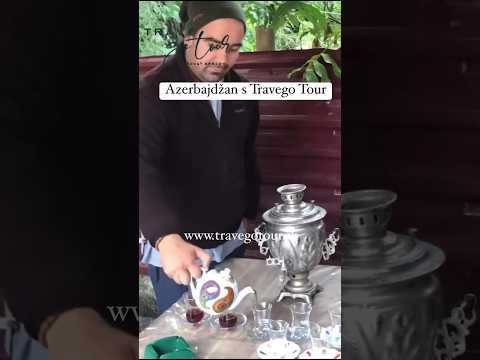
Baku, the capital of Azerbaijan, is a city you should definitely experience. There are few places in the world where the boundary between a modern city and the world of the East blurs so beautifully. Baku is like an Eastern dream that suddenly finds itself firmly in the future, and you will love these transitions. Its ambitious projects, together with the oil extracted nearby in the Caspian Sea, have earned Baku the nickname “the Dubai of the Caspian”. The city certainly does everything it can to live up to this flattering comparison. As soon as you arrive, head behind the stone walls into the old town. Here, lively stone lanes are lined with little shops, teahouses and cafés, all enriched by the patina of the old quarters. No wonder these places have earned a spot on the UNESCO World Heritage List. Old Baku has all the romance of narrow lanes overhung by wooden balconies. In its labyrinth, you will discover a few small mosques and restored caravanserais where you can now enjoy a meal. Its atmosphere will draw you in so completely that you will forget there is an entirely different world beyond the walls. The symbol of the old town is the Maiden Tower, which conceals a legend of unwanted love. The legend tells of a young girl whose father, the local ruler, fell in love with her. Unwilling to accept his plan to marry her, she asked him to build her a tall tower. Whenever the builders announced that the tower was finished, the daughter ordered them to add another storey, until she finally climbed to the top and stepped into the void. The tower has stood here for several centuries, and a Zoroastrian fire temple probably once occupied this site. It is worth climbing its several floors to enjoy the city panorama, because from above you can see that very transition from the old world to the new. Below you lie the roofs of low houses and small minarets, while in the distance rise the ultra-modern towers that symbolise Baku and its futuristic vision. Nowhere else will you experience this contrast quite like here. Another, though certainly not the last, of Baku’s attractions is the unique Palace of the Shirvanshahs complex, which served as the rulers’ seat of power. Azerbaijan’s history was shaped here centuries ago, and the palace remains a sight you simply must see. You will find evocative Eastern corners, tombs and a mosque, and connect with stories etched into the cool stone walls. Then, having soaked up its atmosphere, return to the lanes of the old town and enjoy tea served in small Turkish glasses.
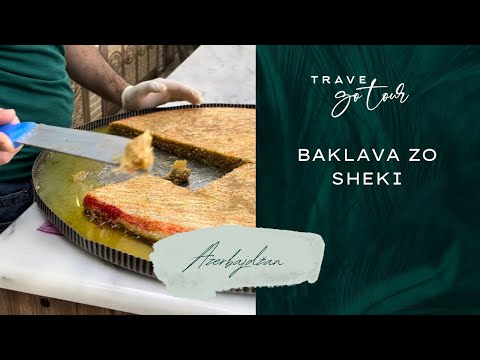
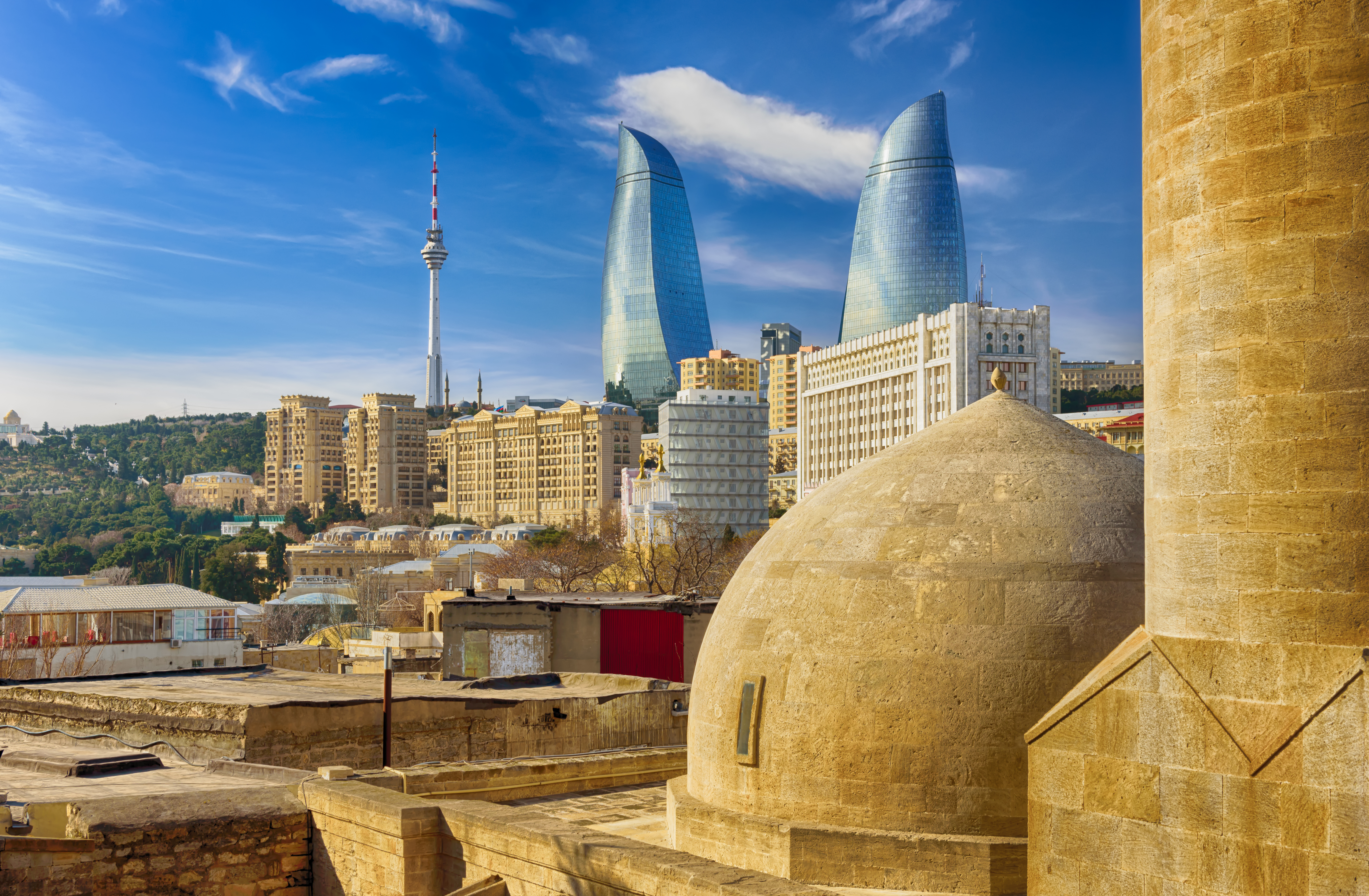
Modern Baku is another world. It stretches along the Caspian Sea, climbs the hills above the city and spreads out just beyond the historic city walls. Three enormous towers, resembling giant flames from a distance, have become the symbol of new Baku. The tallest of the three reaches 182 metres. During the day, you will find yourself gazing at them, while at night you will not be able to take your eyes off them as they light up, change colour and occasionally glow like the flames they resemble. If you love futuristic architecture that would not look out of place even in Singapore, head to the waterfront, where the distinctive Carpet Museum awaits in a building shaped like a rolled-up carpet. Another of Baku’s unique sights is the complex designed by the renowned architect Zaha Hadid. The Caspian waterfront invites you for a stroll and is at its most pleasant in the early evening, when people gather in the surrounding park. They picnic, drink tea, eat, gaze out to sea and enjoy the beautiful evening. It is so easy to fall under its spell! To experience Baku’s European flair for yourself, head to Fountains Square, from which Nizami Boulevard stretches out. Here, rather than mosques and palaces, you will find cafés and restaurants serving chilled Azerbaijani beer or wine, young people walking hand in hand and girls wearing miniskirts. Forget all the generalisations you have read about the Muslim world: only travel shows you what life is really like. Nizami Boulevard is where locals come to wander without any particular destination. It embodies the idea of the Italian passeggiata: to see and be seen. People stroll up and down, browse the windows of luxury boutiques, pause to daydream, sit on a bench and return to the square, eventually settling into one of its cafés or restaurants. If you have no idea what Azerbaijan tastes like, Baku’s food scene will be a complete surprise. Try a minced-meat kebab with pieces of walnut, a perfect lahmacun or vine leaves stuffed with a mixture of rice, meat and herbs. The locals work wonders with aubergines, and if you have room left, taste the local baklava. The way to the heart is through the stomach, and Baku knows exactly how to win you over.
One of the fascinating things about Azerbaijan is that you only need to leave the capital for everything to change. The modern buildings and futuristic feel disappear, and suddenly you find yourself several decades in the past. Outside the capital, the legacy of Azerbaijan’s time in the Soviet Union is very much in evidence. Here and there, old Ladas from that era rattle along broken roads. Head south of the capital to the area known as Gobustan for some wonderful experiences that will round out your impression of this country. Along the way, you will notice oil platforms “bathing” in the Caspian Sea, and once rocky crags appear, you have arrived. This is where you will discover rare and unique petroglyphs carved into the rocks. They are mysterious, veiled by millennia, and even today we do not know exactly whether people created them three, five or ten thousand years ago. They also captivated Thor Heyerdahl, who drew connections between Azerbaijan and the Vikings and their ships through these carvings. It is as though the world were one vast web whose threads you can weave together so beautifully through travel alone. Few tourists visit, so you will feel as though everything around you is here just for you. A stone path leads to the rocks, and you do not need to be an expert to spot the remarkable images on them. Here you will see human figures, there animals or various symbols. Give your imagination free rein: after all, you might just notice something everyone before you has missed. The place is filled with silence, tranquillity and mystery. If Gobustan captures your imagination, stop at the modern museum too, which will help you gain a fuller understanding of the site.
Mud volcanoes are among Azerbaijan’s distinctive attractions. Not that they cannot be found elsewhere in the world—that would not be true—but Azerbaijan has so many that it seems almost impossible to count them all. The most beautiful are around Gobustan, although you can also discover plenty along the road between Baku and Shamakhi. Imagine a lunar landscape with several strange, mud-covered hills rising from it. Those are the volcanoes! They are nothing like Sicily’s majestic Mount Etna; quite the opposite. They are so small that you may almost wonder whether you have come to the right place. Rest assured that you have, and that you will leave delighted. Just approach them and you will see them bubbling, with a large bubble occasionally appearing and bursting to impressive effect. Mud slowly oozes from the cracked volcano, and suddenly the landscape seems even more exotic than before. Have you ever dipped your hand into a volcano? Here you have a rare opportunity, because the mud in these volcanoes is cold. Would you have expected that? According to locals, the volcanic mud even has healing properties, and many spread it on their skin and let it dry, believing it helps with skin conditions. The mud volcanoes will keep you so absorbed that you will end up spending several times longer here than you originally expected.
Historic Shamakhi, lying somewhere halfway between Baku and Sheki, is a place with plenty of stories to tell. It appears out of nowhere, nestled in a valley beneath low hills. Shamakhi now lives on its former glory, but lovers of history and places untouched by tourist crowds will find much to enjoy here. Where Shamakhi stands today, the stories of the Silk Road once unfolded—specifically those of its Caucasian section. This legendary route had many smaller “tributaries”, and the Caucasian branch making its way through Georgia, Armenia and Azerbaijan was of considerable importance. Trade enhanced Shamakhi’s reputation, and the city became so important that it was a capital long before anyone was even talking about Baku. Who knows how Azerbaijan’s history might have unfolded had earthquakes not shaken the soul out of the city so thoroughly that the rulers of Shirvan decided to move to the shores of the Caspian Sea? Today, several reminders of the city’s glorious era remain. One of the first sights to catch your eye in Shamakhi is the enormous Friday Mosque. Many consider it one of the oldest in the Caucasus, although it now has a modern appearance after suffering damage in numerous earthquakes. Despite them all, it has endured and still welcomes worshippers coming to pray. On a hill above the city, visitors are greeted by the beautiful Yedi Gumbaz burial ground, dotted with quiet gravestones and imposing tombs. You will also find several important tombs of the Shirvan dynasty here. Neglected and slowly becoming overgrown with grass, they carry a certain nostalgia for an age that has vanished from this region forever. Yedi Gumbaz has the most evocative atmosphere in the whole city. You stand on a hill, surrounded by gravestones covered in Arabic calligraphy, with the valley below filled by the houses of Shamakhi. If only you could turn back time and watch the city from here when caravans still passed through on their way to the bazaars of the Silk Road.
Sheki, in the west of the country, is one of the most beautiful and pleasant places in all of Azerbaijan. It is like a pearl nestled in the green hills of the Caucasus, exactly the sort of town you might have imagined in this part of the world. It may not impress at first glance: as you make your way through the city’s modern outer shell of Soviet-era buildings, you might think you have seen something like it before. But delve into its old heart and you will change your mind in a second. Here, around the old stone walls, the modern world fades away and you discover historic Sheki’s most fascinating buildings. A small stone church, whose circular nave gives it the appearance of a rotunda, has now been converted into a museum of traditional culture. Its significance is underlined by the fact that it stands on the same site as an older church dating from the time of Caucasian Albania, which extended across this area until around the 9th century. A few metres further up stands the Khan’s Palace, filled with the splendour of the East. The ruler Mohammed Hasan Khan built it at the end of the 18th century as a place to spend his summers. Here, in the green landscape beneath the Caucasian hills, he felt he was in paradise. The khanate established here did not even reach its 80th birthday, but reminders of it remain. Sheki came under Russian rule and was later swallowed up by the Soviet Union, which took little interest in its monuments or significance, leaving the town to decline. Fortunately, time was kind to the Khan’s Palace, and it still welcomes visitors today. You can sense the influence of Persia, enjoy the shade beneath enormous plane trees and listen to the splashing fountain that completes the atmosphere. Every room within the palace walls is different from the last. Colourful pictures, period furniture, fine ceramics, small mirrors, old Persian carpets and intricate paintings fill the interiors. It is a beautiful place! Once you have explored its rooms to your heart’s content, head to the main street and walk until you come across the enormous caravanserai that once accommodated caravans travelling along the trade routes. You can still stay overnight here today, but even if you do not, sit down for tea and try to forget that you are in the 21st century. Here, that comes easily. While in Sheki, you should not miss the finest halva in the entire Caucasus. It originated right here, and shops full of sweet treasures are everywhere. The best-known ones stand near the caravanserai, so simply step inside. People speak of it only in superlatives. It is fantastic, sweet and packed with nuts drenched in honey. You will find it impossible to stop eating, even when you know you should have stopped long ago or you will barely be able to move. Buy a box to take home too. It will easily keep for a month. To really enjoy Sheki, head to the main square near the brick minaret. Teahouses nestle beneath the trees, men play tavla, the scent of tea and coffee fills the air, and once again you feel as though you are travelling through time. How many times has that happened to you in Azerbaijan already? This country will not let you go so easily!