The trio of Azerbaijan, Georgia and Armenia is united by the enchanting region of the South Caucasus. Are they alike, or are they so different that they form entirely separate worlds? What do they have in common, and why do they form a fantastic, captivating mosaic that you should definitely set out to discover?
Nestled between the Turkish and Persian worlds, the South Caucasus is a region that has everything. Whether you are looking for magnificent nature, history, monasteries or mosques, friendly people and excellent food, want to swim in the sea, or simply sit in cafés or wine cellars. The most recent power to unite this trio of countries was the Soviet Union, which bound all three to itself, but the region had also been caught up in various empires throughout its history. The paths of the Silk Road once wound through it, and Armenians, Persians and Ottomans tried to seize it before it eventually fell into Russian hands. Their shared history left its mark on all three countries, but after the collapse of the Soviet Union, they each went their own way. Each country with its own identity, visions and dreams.
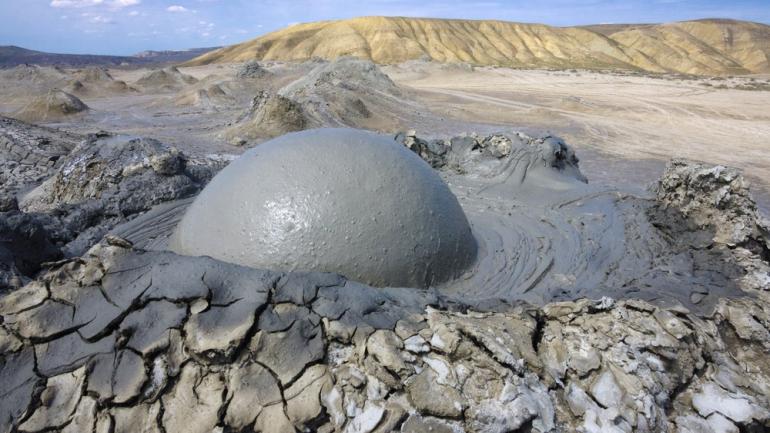
One of the first things that comes to mind when we talk about the Caucasus is its beautiful natural scenery. The Caucasus is a mountain range stretching from the Black Sea to the Caspian Sea, dotted with countless peaks. The most beautiful scenery is in Georgia, which attracts the greatest number of tourists eager to trek and explore valleys and mountains. Northern Georgia has its region of Svaneti, steeped in a mysterious atmosphere, where stone towers huddle beneath rocky peaks. It is also worth coming to the foot of snow-covered Kazbek, associated with the legend of Prometheus, and even if you do not climb to its summit, the view of the iconic mountain beneath which you can walk is magnificent. In recent years, Azerbaijan has been trying to show the world that it too has mountains people can dream of visiting. It is often precisely the unknown that appeals, so people head to small mountain villages such as Xinaliq or Lahic. They are immersed in mountain beauty, and anyone who has seen them will forever hesitate over whether Georgia or Azerbaijan is more beautiful. Armenia has the smallest share of the Caucasus Mountains, but it still knows it has Mount Aragats, where crowds may not flock, but mountain lovers will find plenty to enjoy. Armenia also delights with its natural scenery in the north of the country, where the enormous Lake Sevan appears among the hills with its seaside atmosphere, and in places during summer it can even rival Batumi on the Black Sea. There, people come for the Black Sea; here, they swim in a glacial lake. Another unique feature of the Caucasus is Azerbaijan's mud volcanoes, which the other two countries can only envy.
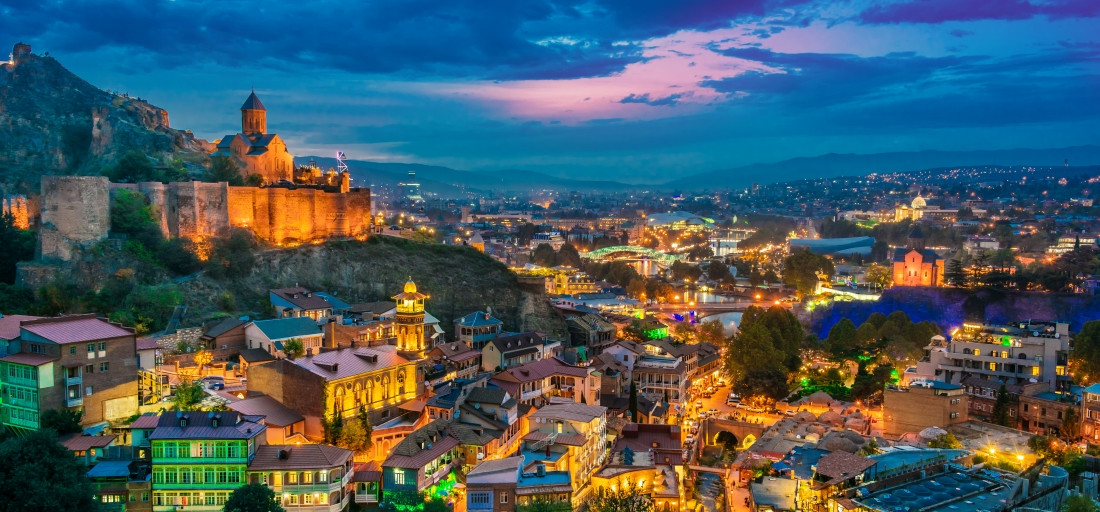
If we wanted to compare the sights in the three countries of the Caucasus, we would have to divide the region, in our minds, into two worlds. The first is Muslim Azerbaijan, while the second is Christian Armenia and Georgia. Religion shaped the architectural soul of these countries, so Georgia and Armenia are dotted with monasteries that are a huge attraction. Armenia presents itself in the Caucasus, and beyond, as the oldest Christian country, where Christianity was established by law as the main religion as early as 301. This is why Armenia is nicknamed the “land of monasteries”, and you will find them almost everywhere. There are so many that, after a while, you may even have your fill of them. Visit Tatev on its rocky crag, Noravank hidden among the hills, Khor Virap with its view of Ararat, or the Sevan monasteries above the turquoise lake. Georgia's monasteries differ a little from their Armenian counterparts, but not fundamentally. What they share is that they were built in perhaps the most beautiful locations, surrounded by an atmosphere of silence, nature and sometimes remoteness, and here and there you can still encounter monks today. Occasionally, you will discover a monastery in Azerbaijan too, but these are only small remnants of forgotten Caucasian Albania, which once formed an empire here. Azerbaijan's monuments are known instead for being steeped in the allure of the Orient. In Baku, you will discover caravanserais typical of the Silk Road, mosques with minarets, the Palace of the Shirvanshahs and lanes reminiscent of Middle Eastern cities. Other parts of the country are not far behind: Shamakhi surprises with its domed tombs, while Sheki has a Khan's Palace that looks as though it has come straight out of Persia. The common denominator of Caucasian towns and cities, however, is socialist architecture from the final decades of the USSR. Reminders of the not-so-distant past can still be found in these countries: huge, monumental statues rise above both Tbilisi and Yerevan, Stalin has a museum in Gori, and Baku is adorned with several old buildings, most notably the Government House near the bay. Almost every town beneath the Caucasus would have something to show. Today, the most modern architecture has flourished above all in Azerbaijan's Baku, where ever more buildings soar into the sky and the city fascinates with structures that would not look out of place in Dubai or Singapore. Tbilisi has a few early examples, but Yerevan seems to have slept through this undeclared race.
A look at the local cuisine provides a wonderful illustration of the Caucasus's diversity. Given the geography, you might expect it to be almost the same everywhere, but you could not be more mistaken. Perhaps local cuisine was precisely where each country wanted to preserve its own identity, and so each has its own ideas. What all three cuisines share is that meat is an exceptionally popular ingredient, whether we are talking about kebabs, shashlik or Armenian khorovats. The people of the Caucasus love cheese, aubergines, and the aroma and flavour of fresh bread or flatbreads. The countries also have in common that each produces its own cognac and its own wine. Georgians lead the way in wine, while Armenians dominate in cognac. Azerbaijanis lag behind. Azerbaijan's cuisine is the most strongly influenced by the Orient, and anyone familiar with the features of Turkish or Iranian cooking will feel right at home here. Minced-meat kebabs alternate with skewered pieces of meat, lahmacun, pide, lentil soups, grilled aubergines stuffed with meat and fantastic rice plov. Through the cuisine, you come to understand how many peoples have mingled here over the centuries. Georgians love rich, hearty dishes after which you will spend a long time sitting, sipping wine and chatting with friends. An iconic dish is khachapuri, savoury dough “pies” filled with wonderful cheese. You will almost never manage to finish them, yet at the next opportunity you will order them straight away. You will also enjoy bean dishes such as lobio or lobiani, or khinkali, dumplings most commonly filled with broth and meat. Caucasian shashlik links Georgia with Armenia, and to this day you will hear “disputes” about who makes it better. Try it in both places and decide for yourself! Armenians will encourage you to try khash, a thick tripe soup, but you will also enjoy borscht and vine leaves stuffed with a mixture of rice and herbs.
One of the Caucasus's greatest assets is its people. Of course, when you travel to Armenia you want to see monasteries, in Georgia you look forward to the Caucasus Mountains, and in Azerbaijan to mud volcanoes or Baku's oriental charm, but in the end it is the people you will remember. Everyone in the Caucasus is united by pride in and love for the region they come from. They are great patriots, often quick-tempered, and whatever you do, do not insult the place where they were born, as they will quickly become your enemies. Azerbaijanis are predominantly Muslim, although Islam has never been very conservative here. Outside their country, they often have a reputation as hustlers, taxi drivers, black-market currency dealers or bazaar traders, and they find it hard to shake off these stereotypes. Yet all you need to do is visit Azerbaijan, and you will see for yourself that they are pleasant people striving to make you fall in love with their country. Georgians have a reputation as the most hospitable people in the Caucasus. Their hospitality is simply impossible to avoid, because it will find you even if you try to hide from it. They seem tough at first, but they very quickly win you over, and never tell them they are Russians, because it is not true and can stir strong emotions. Before long, you suddenly find yourself sitting at the same table, tasting homemade cheese and strong chacha, and listening to a tamada proposing toasts to your health. Of all three nations, Armenians live the most in the past and in nostalgia. It is as though the collapse of the USSR still troubles them and they cannot come to terms with the fact that the heart of the third millennium is beating outside their windows. Armenians are proud to have been the first to adopt Christianity, and they have an enormous sense of family, which they do not forget even when they are far from home. The Armenian diaspora is scattered around the world, and the country's economy also depends on everyone sending money home to support those who have remained in the country beneath the Caucasus. They enjoy melancholy, but also the joy of life, something you will discover very easily over seemingly endless glasses of delicious cognac. Wherever you go in the Caucasus, you will meet people you will remember!