Located in the Middle East, Jordan has become so popular in recent years that it now ranks among the most sought-after destinations in the region. It is easy to see why: once you have seen captivating Petra, inviting Amman or the sands of Wadi Rum, or taken a dip in the Dead Sea, you cannot help falling in love with this country. That is why everyone returns with wonderful memories. Set off to discover Jordan's story and you may find your new favourite country in the world. Don't believe us?
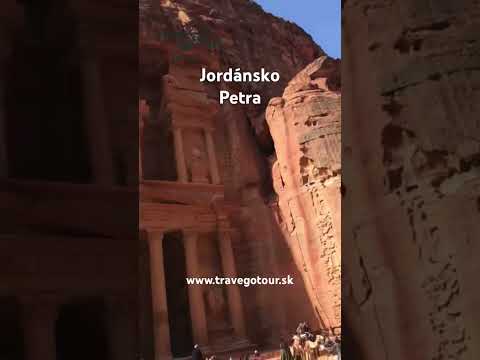
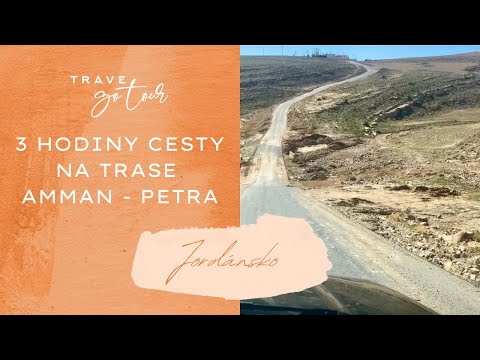
The greatest jewel of the Kingdom of Jordan is, without a doubt, ancient Petra. It is to Jordan what the Taj Mahal is to India or the Great Wall is to China: a symbol capable of drawing thousands of people from halfway around the world. The stone world of Petra lies hidden near the present-day town of Wadi Musa, whose name translates as the Valley of Moses. The journey here from the capital, Amman, takes less than four hours, and when beautiful rocky hills begin to spread across the horizon, you know you are almost there. Modern buildings soon disappear, giving way to a path covered in sand and dust. This is the route to ancient legends carved in stone. Jordan's Petra offers a unique glimpse into an ancient city of the Nabataean civilisation, which was already thriving here in the 7th century BC, though it reached its golden age around the turn of the era. Its symbol is the now world-famous Treasury, carved into reddish sandstone. The Nabataeans were known to the Greeks, the Romans and other great civilisations of the Middle East, but as history so often shows, every empire eventually disappears, and so did the people of this stone city. What armies failed to destroy, earthquakes helped to finish, and eventually Petra vanished not only from people's minds but also from maps. For centuries, no one knew what lay hidden among the rocks of the Valley of Moses. The first person to report on it was the Swiss adventurer Burckhardt, who reached it disguised as a Bedouin in 1812, and news of his discovery spread around much of the world. Suddenly, the path narrows into the Siq, a tight passage squeezed between the rocks. The Siq is an experience in itself, constantly winding like a stone snake. The towering rocks provide welcome shade even in summer, and something interesting appears at every turn. Despite all this beauty, everyone walking through it eagerly awaits the end of the Siq. There is just one reason: at its end, the famous Treasury suddenly begins to emerge. Those first glimpses are unforgettable. Bathed in sunlight, it shimmers in the distance at the end of the rocky passage, and for the first few seconds you cannot quite believe it is real. A few steps closer and you see that it really is standing before you. A true wonder of the world. The beautiful Treasury is actually the tomb of a great Nabataean king, but no one calls it anything else. It resembles an ancient temple, yet it is carved into the rock with such precision that not a single centimetre was left to chance. But Petra does not end here. Quite the opposite: this is only the beginning!
Petra's dusty path cuts further into the city. Several beautiful Nabataean tombs adorn the rock face, and a little further on a theatre seating more than 10,000 spectators is carved into the rock. The heart of Petra is still a few hundred metres away, but this is where you realise just how vast it really is. The rock-cut dwellings are alive with colour. This is where Petra is truly perfect: in the colours that only nature itself could blend. Shades of red, brown, white, silver and black compete across the walls, turning the city into a colourful jewel. On a higher level stand four magnificent tombs. They are not called the Royal Tombs for nothing. No one knows exactly who they belonged to, so people began naming them after what they resembled. One is the Corinthian Tomb, another the Palace Tomb, the third the Silk Tomb, and the last is the Urn Tomb, named after its small stone urn. All the tombs are filled with tranquillity, and the views of the surrounding rocks are beautiful. Petra truly has an air of mystery: even when you are in its very heart, you still cannot tell what lies hidden where, or whether there are temples or tombs beyond the rocks. If you need a break from history, take a seat in one of the little cafés set up by local Bedouins. Beneath the canvas roof of a Bedouin tent, you can enjoy cardamom-flavoured coffee or very sweet black tea with a sprig of mint. The ruins of the former city centre still lie in the dust of the street. The stone gateway has fallen, the temples have disappeared, leaving only fragments of columns with elephant capitals, the fountains dried up centuries ago, and archaeologists search the hillside for buried secrets. Near the old temple nicknamed the “Maiden's Castle”, a path begins climbing towards the monastery of Ed Deir. After the Treasury, it is one of Petra's most famous monuments. There are 800 steps leading up to it, but the beautiful scenery makes them pass almost unnoticed. A few laden donkeys scramble uphill, and here and there a Bedouin woman sits beneath a rock with her children, selling a few small items and brewing tea over a fire of thin twigs. A different world unfolds on the hill where the monastery of Ed Deir stands. The wind blows, silence surrounds you, and views open into deep valleys below. Only the monastery of Ed Deir remains motionless, its presence a reminder that you are still in Petra.
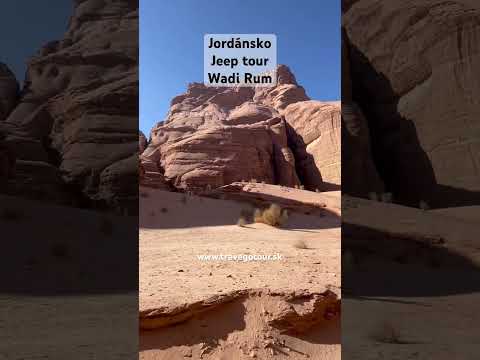
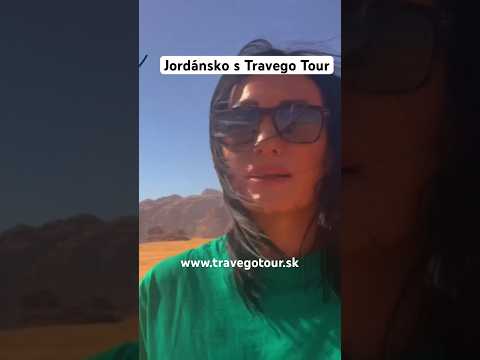
Jordan's Wadi Rum desert is nicknamed the “most colourful desert in the Middle East”. Halfway between historic Petra and the seaside city of Aqaba, it is one of the country's most beautiful places. Through the windows of the speeding minibus, you can sense the landscape turning into desert. Trees disappear, leaving only shrubs, and instead of cows, exotic camels cross the landscape. The small village aptly named Rum is the gateway to this world of sand. Here, simply switch to a jeep and the adventure can begin. Wadi Rum captivates not only with the beauty of its desert but also with its varied rock formations. Among the most beautiful are the “wax” mountains, which resemble melted wax from a distance. Directly beneath the mountains, hidden among the rocks, lies what is most precious in the desert. The narrow Al-Chazali canyon has water and shade, and even in the heat of summer it is wonderfully pleasant here. People knew this long ago: the canyon walls still bear rare petroglyphs left by forgotten civilisations, the former inhabitants of the desert. Not far away, Wadi Rum reveals its colourful beauty. The sand here comes in incredible colours. One part of the desert glows yellow, right beside it the sand takes on a golden hue, and then suddenly, as if someone had drawn a line, Wadi Rum turns red. This is exactly what makes it such a unique place. A few kilometres further on is a spot where, according to legend, the famous Lawrence of Arabia once stopped. His name, too, is bound to the desert's destiny: by crossing it during the First World War, he surprised the Ottomans in Aqaba and drove them out of the Red Sea port. His face is carved into a stone pedestal, and beside it a Bedouin tent is pitched in the sand. The desert has been home to the local Bedouins for generations, and although modern life has drawn them into brick houses, they cannot stop returning here to live, at least for a while, as their ancestors did. Today, the local Bedouins oversee the whole of Wadi Rum, so if you come here, you are certain to meet them. Relax over a glass of strong tea infused with desert mint and sage, and forget for a moment that somewhere far beyond the hills there is civilisation. Incense burns nearby, and suddenly you feel as though you have stepped into a tale from the Thousand and One Nights. The desert has a special charm, and the best way to discover it is to spend a night here. The Bedouins call it a “million-star hotel”, and anyone who looks up at the night sky will understand why.
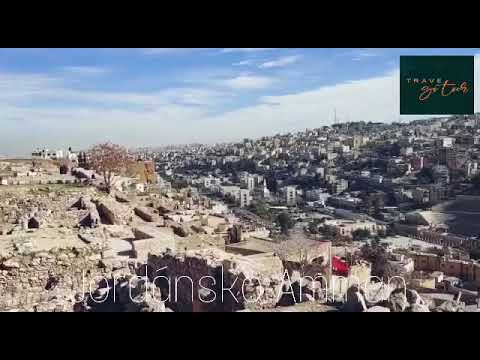
Amman, Jordan's capital, is steeped in history, though it does not reveal it at first glance. It is said to be one of the most ordinary Arab cities in the region, and strange as that may sound, it is not meant as an insult. Life pulses through it, and that is precisely why you will want to see and experience this place for yourself. Like ancient Rome, the city was built on hills, and the valleys between them are now filled with residential districts, squares, streets, mosques and traditional markets. The most captivating area is tucked between the Al-Husseini Mosque and the ruins of the 2nd-century Roman Nymphaeum. Five times a day, the drawn-out notes of the muezzin's call drift over the market from a slender minaret, but life here never stops. The market is bursting at the seams and fascinating to watch. Traders offer nuts, pistachios, dried fruit, dozens of varieties of dates, sweets, sugary treats, fresh mint, herbs, tomatoes, onions, potatoes and fruit from fertile northern Jordan. The honking of cars, buses and minibuses fades away in a small square, and beyond a stone wall rises an enormous Roman theatre. Its setting right in the city centre is remarkable, yet only a handful of people come to explore it. It has shaped Amman's skyline for more than 1,700 years, and today it attracts not only tourists but also young couples in love looking for a little privacy. They choose the highest tiers, sitting side by side, hand in hand, whispering about the future. The main street is a place where you can find everything: clothes, shoes, leather belts, fabrics and household goods, as well as small family-run eateries filled with the aromas of shawarma or falafel with hummus. Several streets climb towards Jebel al-Qalaa, the hill overlooking the city. It resembles an open-air museum, with so many civilisations mingling here that you may struggle to remember them all on your first visit. The columns of the Roman Temple of Hercules stand near the older ruins of the Ammonites, Byzantine churches lie beside them, and a few metres higher stands the Umayyad palace of an Arab caliph. The history of this place is not its only attraction: it also offers the finest panoramic views of the capital. All of Amman lies spread out before you: the Roman theatre, the bazaar districts, the streets, the surrounding hills where modern Amman is growing, and a patch of green woodland with the residence of the current king, Abdullah II. In the evening, simply settle into a traditional teahouse or café and savour an Arabian evening. Amman knows how to make it special.
The road from the biblical hill aptly named Mount Nebo winds its way steeply downwards. The landscape is parched, with only a few patches of green signalling life as far as the eye can see. Shepherds tend flocks of goats in this rugged terrain, and tents alternate with half-ruined houses. The descent from the hill to the destination is an impressive 1,200 metres. On the way to the Dead Sea, you can feel the pressure changing, and your ears may even pop for a moment. The Dead Sea is one of the Middle East's greatest attractions. Jordan shares it with Israel and Palestine, and it forms a natural border between them. The Israeli side may be a little better known, but that makes the Jordanian side all the more appealing, as you can be sure you will not be jostling with crowds of tourists. Large hotel complexes and places to relax have been built near famous Bethany and the point where the River Jordan flows into the Dead Sea. The elevation here is -416 metres, and the heat is intense. The Dead Sea is a phenomenon, and it owes its name to the Romans, who noticed that no fish lived in it and that even boats could not sail on it. Today we know this is due to its extreme salinity, and we also know that the sea and its mud have healing and beneficial effects on the body and skin. Bathing here is an experience. This is nothing like any sea you have known before. Your first step reveals nothing unusual, but as soon as you try to swim, you discover that it is not really possible. The water suddenly lifts you up, and you feel like a cork. In some places, the shores of the Dead Sea are covered in mud. Anywhere else you might avoid it, but not here. Here, you walk straight towards it and cover your whole body, from your face to your heels.
A wonderful surprise in the Kingdom of Jordan is the Roman city of Jerash, hidden in the north of the country. Less than an hour's drive from Amman, tall Roman columns, the ruins of a magnificent city and a wealth of stories emerge from a hillside. Jerash may still not be among Jordan's best-known places, but history lovers will smile in recognition, for it holds some of the most beautiful Roman ruins in the entire Middle East. Many centuries have passed since the first people settled in Jerash, and when the Romans arrived, they adorned it with a colonnade, temples, columns, shrines, arches and an enormous hippodrome. They wanted to impress, for Emperor Hadrian himself was expected to visit, and the locals did not want to let themselves down. Walk through the dust of Jerash and let the city reveal everything it has to offer. First it leads you through a beautiful triumphal arch, tempts you to visit the enormous Hippodrome, where Roman games are held in summer, and finally brings you to the Oval Plaza at the heart of the ancient city. Columns rise all around, while the steps leading up the hill seem to call silently for you to climb them. Take a seat in the magnificent theatre with its panorama of the ancient city, and a few hundred metres away you will be surprised by the excavated remains of ancient churches with Byzantine mosaics. Roman Jerash survived into the Christian era and was only destroyed by an earthquake in the 8th century. The earthquake buried it, which is why it is now compared to Pompeii. No volcanic eruption was needed here: a landslide was enough, and the precious city vanished until the 19th century, when it was discovered by Burkhardt, whom we already know from the story of Petra's rediscovery. Jerash is a pleasant place, never crowded, so you can enjoy the shade of the Roman columns of the goddess Aphrodite almost entirely to yourself. Simply descend the steps from the hill to the main street, and you are travelling through time. The colonnade stretches towards the square, and every step reveals an interesting detail. Will you discover a fountain or notice the stone sewer covers? Jerash is proof that time travel exists. All you need is the desire to try it.
Jordan is full of treasures, filled with the beauty of Arabian tales. Here you can live your own story from the Thousand and One Nights, and only one thing is certain: however long you spend here, it will never be enough, and you will never want to go home.