Ask about the locals' favourite drink in the Middle East, and you will hear about coffee and tea.
Ask about the locals' favourite drink in the Middle East, and you will hear about coffee and tea. The morning ritual of fragrant coffee has become so deeply rooted here that the little local cafés are busier than the marketplaces in the morning. Where did coffee in the Middle East come from, and what kinds can you enjoy? Join us for a cup of this much-loved drink.
For many people, coffee has become synonymous with mornings, the start of a new day and a ritual they look forward to. This drink has conquered the world, and an estimated 2.25 billion cups of coffee are now consumed every day. The Middle East is certainly not lagging behind, enjoying its coffee almost around the clock. All you need to do is sit down, savour it and fall in love. The Middle East is not considered the birthplace of coffee, but people here very quickly adopted it and made it their own. Old legends tell of coffee originating in Ethiopia, where local herders noticed how energetic their goats were. The animals had been nibbling ripe coffee cherries, and when the herders tried them themselves, they were astonished. Of course, coffee as we know it today has come a long way since then, travelling from the berries on coffee bushes through roasting and finally to your table. Coffee bean roasting only appears after 1200, and this moment is crucial to the coffee we drink today.
Coffee travelled ever further north through Yemen and the Arabian Peninsula, eventually reaching the Middle East. It took such deep root in these parts that it became a favourite drink, and while people in the Middle East were enjoying coffee, Europeans still knew almost nothing about it. Until the beginning of the 16th century, coffee did not leave the Middle East and the Arabian Peninsula, and we would even have searched in vain for coffee plants elsewhere. According to the story, a major turning point came when Baba Budan, an Indian pilgrim returning from a pilgrimage to Mecca, decided to take seven coffee beans from Mocha with him to Europe. The coffee revolution in Europe could begin! Later came voyages of discovery, and Europeans acquired coffee of their own in Sri Lanka and Indonesia. Coffee culture in the Arab world can be traced back to the 15th century, when it began in Yemen. A century later, in the 16th century, coffee quite literally flooded the Middle East. The first little coffeehouses opened, coffee was drunk in the street and served at home to honoured guests, and slowly but surely it found its way into local people's hearts. Arab coffeehouses initially became meeting places, then venues where poetry mingled with prose, and later many developed into political gathering places where, under a veil of secrecy and over the aroma of coffee, plans were hatched to overthrow regimes, kings and prime ministers. More than one revolution in the Arab world began inside a little coffeehouse. Coffee became a symbol of hospitality, and you too may often become its “victim” while wandering the streets of Amman, Damascus or Beirut, when someone invites you for a chat over a cup of coffee.
Arabic coffee in its purest form is made from coffee beans roasted at 165 °C to 210 °C. The coffee is brought to the boil and left unfiltered, and sugar may or may not be added. Traditionally, it contains no sugar, and it is up to you whether to add any. But that is not the whole story, because the most characteristic flavour of the Middle East is coffee with cardamom. You are sure to notice green pods with an unmistakable aroma in Arab markets. Crack them open and you will find cardamom, which is ground into a powder and added to coffee. Coffee is often ground together with the cardamom, making it an integral part of the drink. You will probably need to get used to the taste at first, but after a cup or two, you will find yourself admitting that it has something special. When travelling, forget your favourite espresso or cappuccino and let your taste buds venture into new, unexplored territory. Cardamom gives coffee an exotic aroma and flavour, and even has several unique properties. It helps flush toxins from the body, lowers blood pressure, aids digestion and is an excellent antioxidant. You will also often find coffee with cardamom called “Levantine coffee” or “coffee from the Levant”.
Have you ever heard of Bedouin coffee? If you travel through southern Jordan and find yourself in the colourful Wadi Rum desert, you are sure to come across it! Bedouin coffee originated in Yemen and reached Jordan through the port of Aqaba at the northern tip of the Red Sea. Bedouin coffee is prepared by roasting coffee beans in a small pan directly over the fire. The crushed coffee beans are mixed with crushed cardamom, and everything is placed together in a pot, which is filled with boiling water. The Bedouin coffee is then poured from the pot into tiny cups from a height. This gives the host an opportunity to serve you several times, and traditionally three cups of coffee are mentioned. The coffee is light in colour, sometimes almost transparent, and can be served with or without sugar. The Bedouins prefer it with sugar, sweetening their hard life in the desert regions and giving them energy.

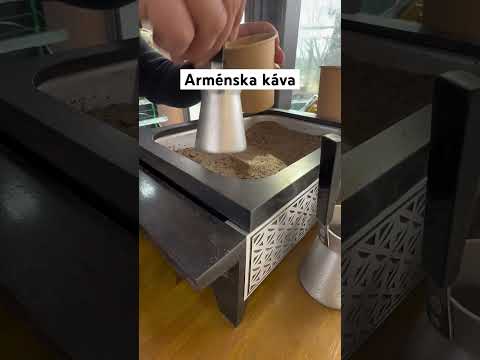
Among the typical coffees you will encounter in the Middle East is “Turkish coffee”, traditionally prepared in a cezve. This is placed on a hot plate, or even prepared in a more exotic way on hot sand. According to connoisseurs, this particular method gives the coffee a rich aroma and flavour because it takes longer to prepare. Turkish coffee is even used in pre-wedding rituals, traditionally prepared by the bride-to-be for her groom, but with salt instead of sugar. If he drinks it without showing any negative emotion, it is a good sign that he will make a good husband. Turkish coffee is popular and found almost everywhere, from Lebanon through Syria and Jordan to Palestine, as well as in the surrounding countries.

In Syria, coffee often means a delicious drink very similar to Turkish coffee. Water is brought to the boil, ground coffee is added, and it is placed back over the fire to boil again. Only then are cardamom and sugar added. Plenty of sugar, because sweet coffee is especially popular in Syria, although you can also find it without sugar. The coffee is transferred to a cezve or a vessel called an ibrik, then slowly poured from a height in a stream into tiny cups similar in size to espresso cups. Try a piece of dark chocolate with it and see how well they go together.
In Saudi Arabia, coffee is a daily ritual, because no business dealings, gathering of friends or family get-together is complete without a few cups. Coffee tastes a little different here than in neighbouring countries, as it is traditionally prepared using green coffee beans that are roasted only very lightly. Cardamom is added too, and you may well also be offered powdered milk. The coffee is heated until it starts to boil and foam forms on top. Only then is it poured into small cups, which are never handed over or accepted with the left hand.

Perhaps the Middle Eastern country with the greatest passion for coffee is Lebanon. Traditionally, coffee here is prepared in a pot called a Rakwe, from which it is poured into cups from a height. These should not be ordinary cups, but special coffee cups called finjan, decorated with characteristic patterns. The Lebanese prefer strong, black coffee, and their unique touch is to grind darker and lighter beans together, giving the coffee a slightly different flavour from that in neighbouring countries. The Lebanese are quite literally addicted to coffee, and you will sense it in every city, where cafés are the most important places. If you do not drink coffee, it is almost as though you are ostracised from society, and that is something nobody in a country like Lebanon can afford.

So, will you join us for a coffee in the Middle East?